Category: Tips & Tricks

  • How Do the Number 1 Blogs on Google Actually Make Money Every Month?

    How Do the Number 1 Blogs on Google Actually Make Money Every Month?

    Have you ever wondered how some blogs seem to dominate Google search results while generating thousands—or even millions—of dollars every year?

    Many people assume successful blogs make money simply because they attract a lot of visitors. While traffic is important, the real secret lies in how that traffic is monetized.

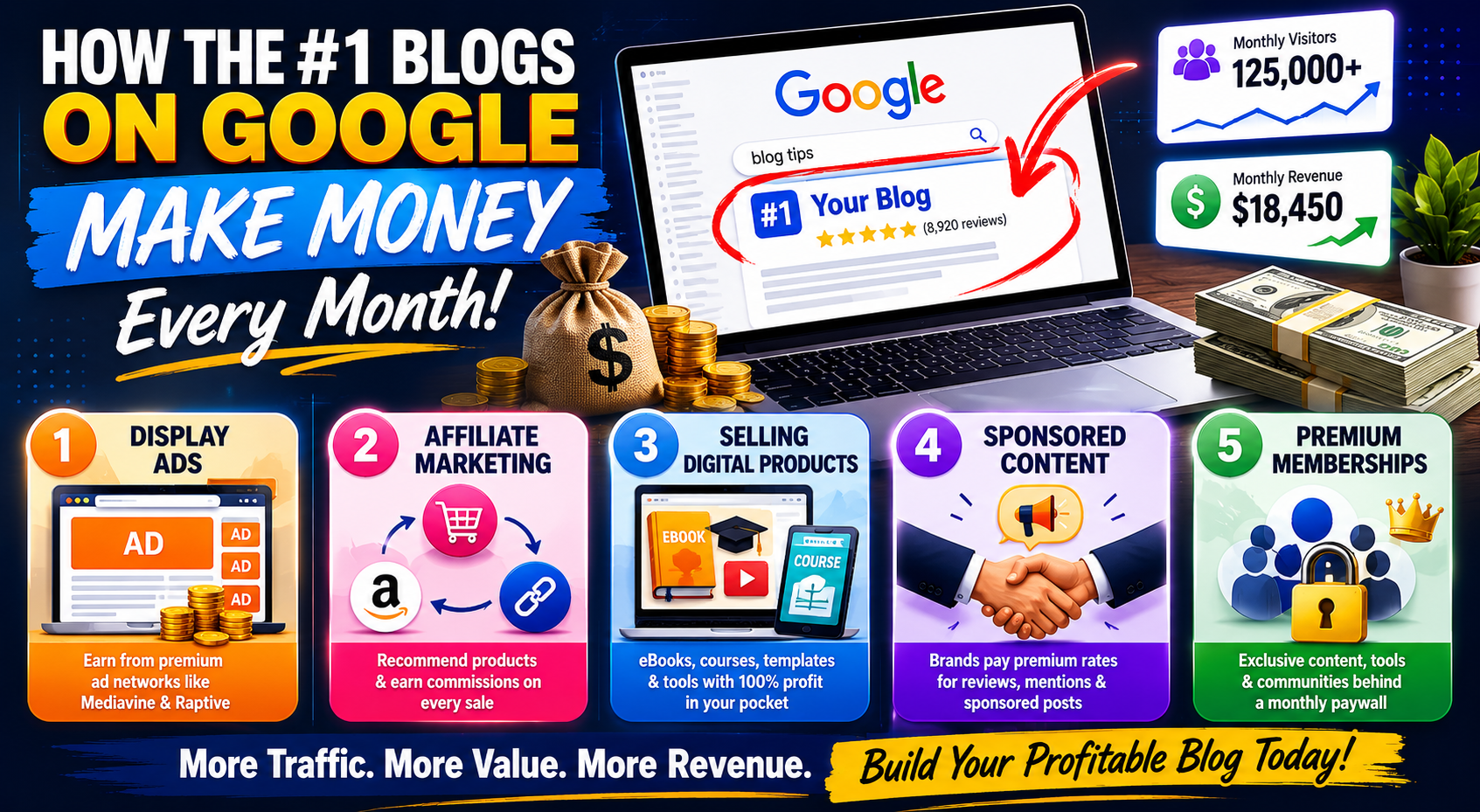
    The highest-ranking blogs on Google have developed sophisticated systems that turn readers into revenue through multiple income streams. Instead of relying on a single source of income, they combine advertising, affiliate marketing, digital products, sponsorships, and memberships to create highly profitable online businesses.

    Let’s explore the five primary ways top-ranking blogs generate consistent monthly revenue.

    Why Ranking #1 on Google Is So Valuable

    When a blog ranks at the top of Google’s search results, it gains access to highly targeted visitors who are actively searching for information, products, or solutions.

    Unlike social media traffic, which often disappears after a few hours, Google traffic can continue flowing for months or even years after a blog post is published.

    This creates a powerful business asset.

    A single article ranking for a high-volume keyword can attract thousands of visitors every month without ongoing advertising costs.

    The question then becomes:

    How do successful blogs turn those visitors into income?

    1. Display Advertising

    One of the most common revenue streams for successful blogs is display advertising.

    When visitors browse a blog, advertisements are displayed throughout the website. The blog owner earns money whenever these ads are viewed or clicked.

    How It Works

    Advertisers pay advertising networks to place ads in front of relevant audiences.

    The network then shares a portion of that revenue with the blog owner.

    The more traffic a blog receives, the more advertising income it can generate.

    Premium Ad Networks

    Many top blogs eventually qualify for premium advertising networks that pay significantly more than basic ad platforms.

    These networks often require substantial traffic levels before accepting publishers.

    Benefits include:

    • Higher advertising rates
    • Better quality advertisers
    • Improved user experience
    • Increased earnings per visitor

    For blogs generating hundreds of thousands of monthly visitors, advertising alone can produce a significant income stream.

    2. Affiliate Marketing

    Affiliate marketing is one of the most profitable monetization methods used by successful bloggers.

    Instead of selling their own products, bloggers recommend products or services offered by other companies.

    When a reader clicks a special tracking link and makes a purchase, the blogger earns a commission.

    Why Affiliate Marketing Works So Well

    Visitors often arrive on blogs seeking recommendations.

    Examples include:

    • Best web hosting providers
    • Best laptops for students
    • Best fitness equipment
    • Best accounting software
    • Best marketing tools

    By providing valuable reviews and recommendations, bloggers help readers make purchasing decisions while earning commissions.

    Examples of Affiliate Content

    Successful affiliate articles often include:

    • Product reviews
    • Comparison guides
    • Buying guides
    • Tutorials
    • Resource pages

    Some high-performing affiliate articles continue generating commissions for years after publication.

    3. Selling Digital Products

    Many of the most profitable blogs eventually move beyond advertising and affiliate income by creating their own products.

    Digital products offer some of the highest profit margins available online because they can be sold repeatedly without inventory costs.

    Popular Digital Products

    Examples include:

    • eBooks
    • Online courses
    • Templates
    • Design assets
    • Business documents
    • Marketing resources
    • Software tools
    • Membership libraries

    Once created, these products can be delivered automatically to customers around the world.

    Why Digital Products Are Powerful

    Unlike affiliate marketing, where commissions are shared with another company, digital product sales allow creators to keep most or all of the revenue.

    This makes digital products one of the fastest ways to increase blog profitability.

    4. Sponsored Content

    As a blog grows in authority and attracts a large audience, brands often become interested in reaching that audience.

    One way they do this is through sponsored content.

    What Is Sponsored Content?

    Sponsored content occurs when a company pays a blog owner to feature its product, service, or brand.

    This can take several forms:

    • Product reviews
    • Sponsored articles
    • Brand mentions
    • Case studies
    • Newsletter promotions

    The blog receives payment in exchange for exposure to its audience.

    Why Brands Pay for Blog Exposure

    A top-ranking blog often attracts highly targeted visitors.

    For businesses, gaining exposure to those readers can be extremely valuable.

    As a result, successful blogs can command premium sponsorship fees.

    Well-established blogs sometimes earn thousands of dollars from a single sponsored article.

    5. Premium Memberships and Subscriptions

    One of the most reliable revenue models used by top blogs is recurring memberships.

    Instead of relying on one-time purchases, blogs create exclusive content or tools available only to paying members.

    Subscribers pay monthly or yearly fees for access.

    What Membership Blogs Offer

    Membership programs may include:

    • Exclusive articles
    • Private communities
    • Industry research
    • Premium tools
    • Educational resources
    • Video training
    • Live events
    • Expert support

    Because payments recur each month, memberships provide predictable income.

    Why Recurring Revenue Matters

    Many successful bloggers consider memberships their most valuable revenue stream because they reduce dependence on traffic fluctuations.

    Even if traffic temporarily drops, recurring subscriptions continue generating revenue.

    The Most Successful Blogs Use Multiple Income Streams

    The highest-earning blogs rarely rely on just one monetization method.

    Instead, they combine several strategies.

    For example, a successful blog might generate income from:

    • Display ads
    • Affiliate commissions
    • Digital products
    • Sponsored content
    • Membership subscriptions

    This diversification creates stability and increases overall profitability.

    If one revenue source slows down, others continue generating income.

    How Long Does It Take a Blog to Make Money?

    One of the biggest misconceptions about blogging is that income appears immediately.

    In reality, successful blogs often spend months building content and search visibility before significant revenue arrives.

    Factors that influence growth include:

    • Content quality
    • Search engine optimization (SEO)
    • Competition level
    • Website speed
    • User experience
    • Publishing consistency

    The blogs ranking at the top of Google today often invested years into creating valuable content before reaching their current position.

    Why Website Speed Matters for Blog Revenue

    Every monetization strategy discussed above depends on one critical factor:

    Traffic.

    And traffic depends heavily on website performance.

    Slow websites often experience:

    • Lower Google rankings
    • Higher bounce rates
    • Fewer page views
    • Reduced conversions

    That’s why the most successful blogs invest heavily in:

    • Fast hosting
    • Technical SEO
    • Mobile optimization
    • High-performance website design

    A fast website creates a better user experience and helps content rank higher in search results.
    Final Thoughts

    The number one blogs on Google don’t make money through luck.

    They generate revenue by attracting targeted traffic and converting that traffic into income through multiple proven monetization methods.

    The most common revenue streams include:

    1. Display advertising
    2. Affiliate marketing
    3. Digital product sales
    4. Sponsored content
    5. Premium memberships

    When combined with strong SEO, valuable content, and a fast website, these monetization strategies can transform a blog from a simple content platform into a highly profitable online business.

    If your goal is to build a blog that ranks on Google, attracts consistent traffic, and generates real revenue, investing in a professionally built, SEO-optimized website is one of the smartest places to start.

  • Why Is Cheap Shared Hosting Making My Business Website Load So Slowly?

    Why Is Cheap Shared Hosting Making My Business Website Load So Slowly?

    Your website might look professional, have great content, and offer excellent products or services—but if it’s hosted on cheap shared hosting, visitors may never stick around long enough to see any of it.

    Website speed has become one of the most important factors affecting user experience, search engine rankings, lead generation, and online sales. Yet many business owners unknowingly sabotage their website’s performance by choosing the cheapest hosting plan available.

    If your website takes several seconds to load, experiences random slowdowns, or occasionally becomes unavailable, your hosting provider could be the root cause.

    Let’s explore why cheap shared hosting slows websites down and what you can do to fix it.

    What Is Shared Hosting?

    Shared hosting is a hosting environment where hundreds—or even thousands—of websites share the same server resources.

    Instead of having dedicated processing power, memory, and storage, all websites on the server compete for the same pool of resources.

    Hosting companies offer these plans at very low prices because the costs are spread across many customers.

    While shared hosting may be suitable for small personal websites or hobby projects, it often struggles to meet the demands of a growing business website.

    Why Shared Hosting Causes Slow Website Performance

    Imagine running a business in a building where thousands of other businesses share the same electricity, water supply, and internet connection.

    Everything works fine until one tenant suddenly starts consuming most of the resources.

    The same thing happens with shared hosting.

    When other websites on the server demand more resources, your website is left fighting for what’s available.

    The result?

    • Slow page loading times
    • Delayed server responses
    • Website downtime
    • Poor user experience

    Let’s look at the biggest reasons this happens.

    1. Bad Neighbor Syndrome

    One of the most common problems with shared hosting is known as “Bad Neighbor Syndrome.”

    Because your website shares a server with many others, the behavior of neighboring websites can directly affect your performance.

    For example, if another website on the server:

    • Experiences a sudden traffic spike
    • Runs poorly optimized software
    • Gets infected with malware
    • Sends large amounts of spam emails
    • Uses excessive server resources

    Your website may become slower even though nothing has changed on your end.

    This means your business performance is partially dependent on the actions of strangers you don’t know.

    The Hidden Risk

    In severe cases, a compromised website on the same server can even impact:

    • Security
    • Email deliverability
    • Server reputation
    • Uptime reliability

    This creates risks that many business owners never realize exist.

    2. Poor User Experience Drives Visitors Away

    Modern internet users are impatient.

    Research consistently shows that visitors expect websites to load within just a few seconds.

    When a page takes too long to load, people don’t wait.

    They leave.

    Potential customers may:

    • Abandon your website
    • Visit a competitor
    • Lose confidence in your business
    • Never return

    Even a small delay can significantly reduce conversions.

    What Visitors Expect Today

    Users generally expect:

    • Instant navigation
    • Fast page loads
    • Smooth mobile experiences
    • Reliable performance

    A slow website creates frustration and damages trust before customers even engage with your products or services.

    Slow Websites Lose Sales

    Consider the customer journey:

    A visitor clicks your website from Google.

    Your page begins loading.

    Three seconds pass.

    Five seconds pass.

    The page still isn’t ready.

    Most users simply hit the back button and choose another business.

    That lost visitor may have become a paying customer if your website loaded quickly.

    3. Google Uses Speed as a Ranking Factor

    Website speed doesn’t just affect visitors.

    It also affects how search engines evaluate your website.

    Google has publicly confirmed that page speed and user experience metrics influence search rankings.

    A slow website can negatively impact:

    • Search visibility
    • Organic traffic
    • Mobile rankings
    • Core Web Vitals scores
    • Crawl efficiency

    If your competitors have faster websites, Google may prioritize their pages above yours in search results.

    Core Web Vitals Matter

    Google’s Core Web Vitals measure:

    • Loading performance
    • Visual stability
    • User interaction responsiveness

    Cheap hosting often struggles to meet these performance benchmarks because the server itself is overloaded.

    Even excellent content can struggle to rank when the underlying infrastructure is slow.

    4. Server Response Times Are Often Terrible

    One overlooked metric is server response time.

    Before a webpage even begins loading, the server must respond to the visitor’s request.

    Budget hosting providers frequently overload servers to maximize profits.

    As a result:

    • Requests take longer to process
    • Database queries become slower
    • Dynamic pages lag
    • Overall website responsiveness suffers

    A slow server creates delays before your website content even starts appearing.

    5. Downtime Can Cost Your Business Money

    Cheap hosting plans often experience more outages and interruptions.

    When your website goes offline:

    • Customers cannot contact you
    • Leads are lost
    • Sales opportunities disappear
    • Search engines may encounter crawl errors

    Even brief periods of downtime can impact revenue and customer trust.

    For businesses that depend on their website, reliability is just as important as speed.

    What Is the Solution?

    The best solution is upgrading to premium hosting that provides dedicated or guaranteed resources.

    This can include:

    Managed Cloud Hosting

    Cloud hosting distributes resources across multiple servers.

    Benefits include:

    • Faster performance
    • Better reliability
    • Improved scalability
    • Enhanced uptime

    Managed WordPress Hosting

    Designed specifically for WordPress websites.

    Benefits include:

    • Server-level optimization
    • Automatic updates
    • Enhanced security
    • Better caching systems

    Virtual Private Servers (VPS)

    A VPS provides dedicated portions of server resources rather than sharing everything equally.

    Benefits include:

    • Greater control
    • Improved performance
    • Better resource allocation

    Dedicated Servers

    For high-traffic websites, dedicated servers provide maximum performance by allocating an entire server to a single business.

    Benefits of Upgrading Your Hosting

    Businesses often notice immediate improvements after moving away from cheap shared hosting.

    Common benefits include:

    • Faster page load speeds
    • Better Google rankings
    • Higher conversion rates
    • Improved customer experience
    • Increased website stability
    • Stronger security
    • Reduced downtime

    For many businesses, upgrading hosting delivers one of the highest returns on investment among all website improvements.

    Is Cheap Hosting Ever Worth It?

    Cheap shared hosting can work for:

    • Personal blogs
    • Small hobby websites
    • Temporary projects
    • Websites with very little traffic

    However, if your website generates leads, sales, bookings, or customer inquiries, relying on bargain hosting can ultimately cost more than it saves.

    Final Thoughts

    Your website’s performance is only as strong as the server powering it.

    Cheap shared hosting may save a few dollars each month, but it often leads to slower load times, lower search rankings, frustrated visitors, and lost revenue.

    If your business depends on its online presence, investing in high-quality hosting is one of the smartest decisions you can make.

    A fast website creates a better user experience, improves SEO performance, increases conversions, and helps your business compete effectively online.

    Don’t let a slow server drive potential customers away. Upgrade to reliable, high-performance hosting and give your website the foundation it needs to succeed.

  • Template Website vs Custom Website: Which One Is Right for Your Business?

    Template Website vs Custom Website: Which One Is Right for Your Business?

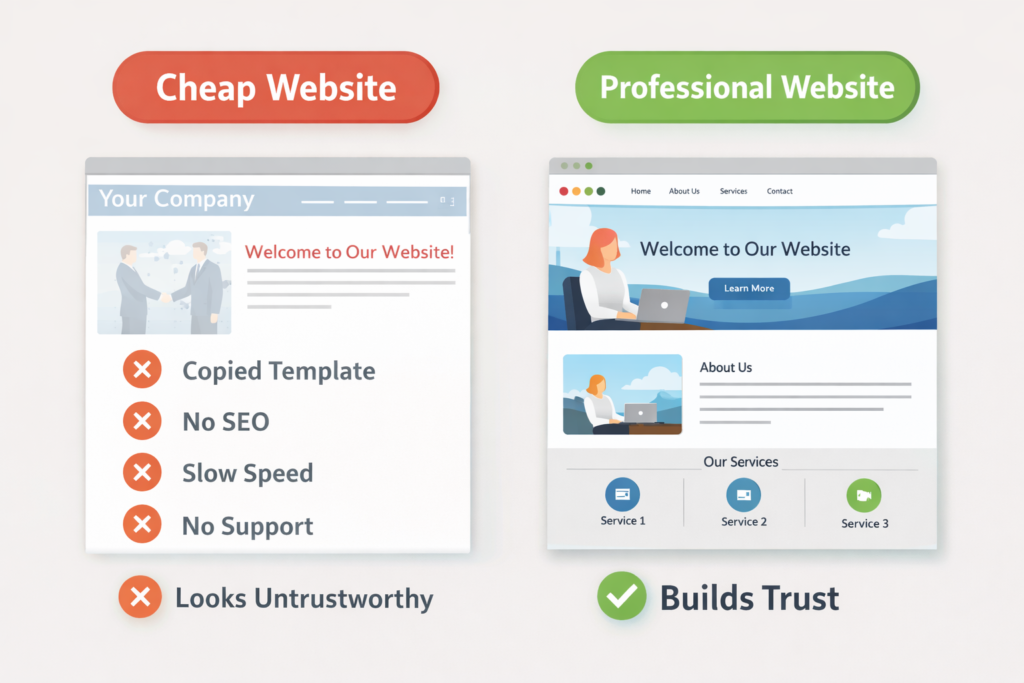
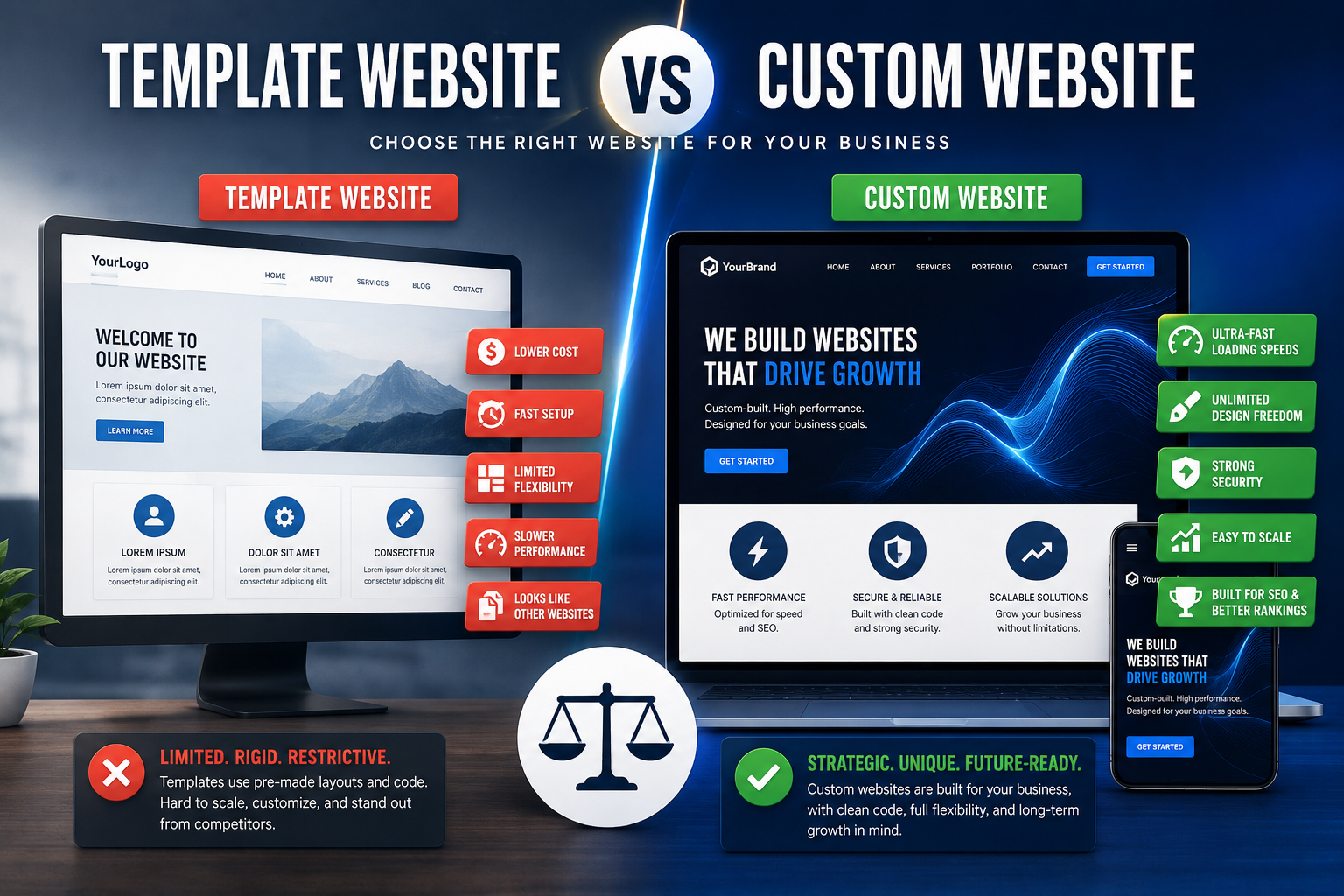
    When building a website for your business, one of the first decisions you’ll face is whether to use a website template or invest in a custom built website.

    At first glance, templates can seem like the obvious choice. They are inexpensive, quick to launch, and require little technical knowledge. However, as your business grows, the limitations of template based websites often become apparent.

    A custom built website, on the other hand, is designed specifically for your business goals, customers, and long term growth strategy.

    So which option is right for you?

    Let’s break down the key differences between template websites and custom websites so you can make an informed decision.

    What Is a Template Website?

    A template website is built using a pre designed layout that allows users to replace placeholder content with their own text, images, and branding.

    Popular platforms that offer template based websites include:

    • WordPress themes
    • Wix templates
    • Squarespace templates
    • Shopify themes
    • Webflow templates

    Templates are designed to help businesses get online quickly without the cost of custom development.

    While this sounds appealing, there are important trade-offs to consider.

    Advantages of Template Websites

    Lower Initial Cost

    The biggest advantage of a template website is affordability.

    Many templates are free or available for a relatively small one time fee.

    For startups and hobby projects with limited budgets, this can be an attractive option.

    Faster Launch Time

    Because much of the design work has already been completed, template websites can often be launched within days rather than weeks.

    Businesses that need an online presence quickly may find this beneficial.

    Beginner Friendly

    Most website builders offer drag and drop editors that make it easy for non-technical users to create pages and update content.

    No coding knowledge is required.

    Disadvantages of Template Websites

    Limited Design Flexibility

    Although templates allow for some customization, they are ultimately built around a fixed structure.

    This means:

    • Your website may look similar to competitors using the same theme.
    • Certain layouts cannot be changed easily.
    • Unique branding opportunities may be limited.

    Your business ends up adapting to the template instead of the template adapting to your business.

    Slower Performance

    Many templates are built to support hundreds of different features and use cases.

    As a result, they often contain large amounts of unnecessary code.

    This can lead to:

    • Slower page load times
    • Reduced mobile performance
    • Lower Core Web Vitals scores
    • Poor user experience

    Website speed is a critical ranking factor and directly impacts conversion rates.

    Difficult to Scale

    As your business grows, you may want advanced functionality such as:

    • Custom booking systems
    • Client portals
    • Membership platforms
    • Advanced e-commerce features
    • API integrations

    Adding these features to a template website can become expensive, complicated, or impossible depending on the platform.

    Security Risks

    Templates often rely on multiple third party plugins and extensions.

    Each additional plugin creates another potential vulnerability that hackers may exploit.

    Poorly maintained themes can also become security liabilities over time.

    What Is a Custom Built Website?

    A custom-built website is developed specifically for your business from the ground up.

    Instead of working within the limitations of an existing template, developers design and build every component around your goals, branding, and customer experience.

    The result is a website that is uniquely yours.

    Advantages of Custom Websites

    Complete Design Freedom

    With a custom website, every element is tailored to your business.

    You can create:

    • Unique layouts
    • Custom animations
    • Personalized customer journeys
    • Industry specific functionality
    • Distinctive branding experiences

    Your website becomes a competitive advantage rather than a copy of hundreds of other sites online.

    Superior Performance

    Custom websites are built using clean, optimized code.

    Because developers only include the features your business actually needs, the website remains lightweight and efficient.

    Benefits include:

    • Faster loading speeds
    • Better mobile performance
    • Improved user experience
    • Higher conversion rates

    Visitors are more likely to stay on a website that loads quickly and feels responsive.

    Better SEO Performance

    Search engines reward websites that provide a fast, accessible, and user-friendly experience.

    Custom websites often outperform templates because they can be optimized from the ground up for:

    • Technical SEO
    • Page speed
    • Mobile responsiveness
    • Structured data
    • Core Web Vitals

    These factors contribute to stronger search engine rankings over time.

    Scalability for Growth

    A custom website grows with your business.

    Whether you need:

    • New service pages
    • Online payment systems
    • Customer dashboards
    • Booking platforms
    • CRM integrations
    • Advanced automation

    A custom framework provides the flexibility to expand without rebuilding your entire website.

    Enhanced Security

    Custom websites typically have fewer dependencies and unnecessary plugins.

    This reduces attack surfaces and allows developers to implement stronger security practices tailored to your needs.

    Disadvantages of Custom Websites

    Higher Upfront Investment

    Custom development requires professional design, planning, coding, testing, and optimization.

    As a result, the initial cost is higher than purchasing a pre-made template.

    However, many businesses view this as a long term investment rather than an expense.

    Longer Development Timeline

    Unlike templates that can be launched quickly, custom websites require time for:

    • Strategy
    • Design
    • Development
    • Testing
    • Optimization

    Depending on complexity, projects may take several weeks or months to complete.

    Which Option Is Best for Your Business?

    Choose a Template Website If:

    • You are launching a personal project.
    • You need a simple online presence.
    • Your budget is extremely limited.
    • You don’t expect significant growth.
    • You need a website immediately.

    Choose a Custom Website If:

    • Your website generates leads or sales.
    • You rely on Google search traffic.
    • You want a unique brand identity.
    • Performance and speed matter.
    • You need advanced functionality.
    • You plan to grow your business over time.

    For most established businesses, a custom website delivers significantly greater value in the long run.

    Cost vs Value: Looking Beyond the Price Tag

    Many business owners focus solely on the upfront cost when comparing templates and custom websites.

    A better question is:

    “What will this website help my business earn over the next five years?”

    A slow website that loses customers every day can cost far more than a custom website that converts visitors into paying clients.

    The cheapest solution is not always the most affordable in the long term.

    Final Verdict.

    Template websites are useful for hobby projects, temporary websites, and businesses operating on extremely tight budgets.

    However, if your website plays an important role in generating leads, attracting customers, building trust, or driving online sales, a custom-built website is usually the smarter investment.

    Custom websites offer superior speed, flexibility, scalability, branding opportunities, SEO performance, and long term value.

    Your website should be one of your most powerful business assets not a limitation that holds your growth back.

    Ready to build a website that is designed specifically for your business goals? Contact our team today to discuss a high performance custom website that helps your business stand out and grow online.

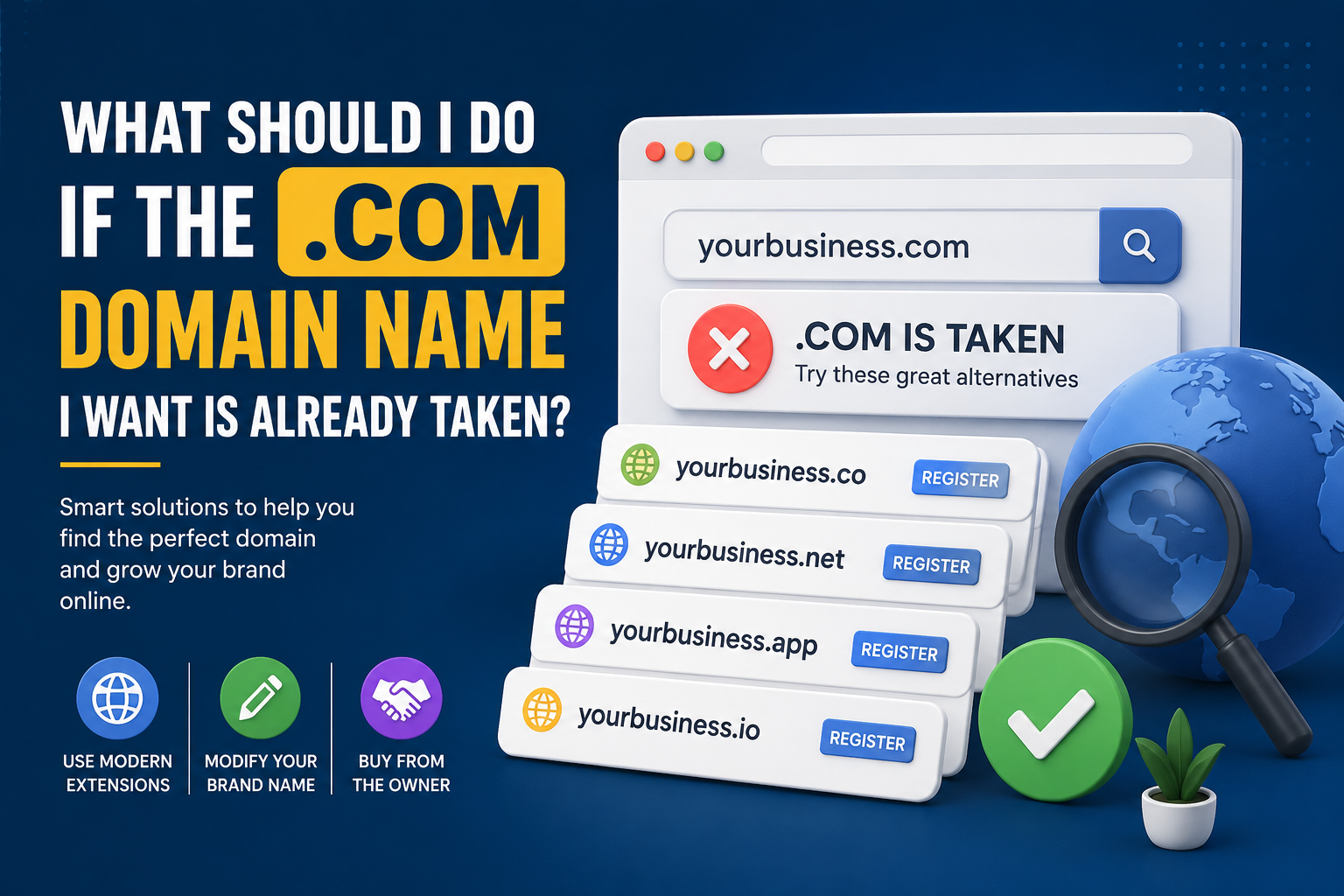
  • What Should I Do If the .com Domain Name I Want Is Already Taken?

    What Should I Do If the .com Domain Name I Want Is Already Taken?

    Finding the perfect domain name for your business can feel exciting until you discover that the .com version is already registered.

    Many entrepreneurs assume this means they need to completely rebrand or settle for a poor alternative. Fortunately, that is not the case.

    The reality is that thousands of successful businesses operate without owning their exact .com domain. With the right strategy, you can still build a memorable brand, rank well on Google, and create a professional online presence.

    In this guide, we’ll explore the best options available when your preferred .com domain name is already taken.

    Why Are So Many .com Domains Already Registered?

    The .com extension has been around since the early days of the internet and remains the most recognized domain extension worldwide.

    Because of its popularity:

    • Millions of domain names have already been registered.
    • Many domains are owned by businesses actively using them.
    • Some domains are held by investors who buy and resell valuable names.
    • Others are reserved for future projects and may not currently display a website.

    As a result, finding a short, brandable .com domain has become increasingly difficult.

    However, a taken .com domain does not mean your branding journey is over.

    Option 1: Use a Modern Domain Extension

    One of the easiest and most effective solutions is choosing a modern top level domain (TLD).

    Today’s internet users are far more familiar with alternative extensions than they were a decade ago. Search engines such as Google also treat these extensions similarly to .com when evaluating websites.

    Best Alternatives to .com

    .co

    Perfect for startups, agencies, freelancers, and modern businesses.

    Examples:

    • yourbrand.co
    • growthstudio.co
    • creativehub.co

    .net

    A trusted alternative that has existed for decades.

    Ideal for:

    • Technology companies
    • Service providers
    • Online platforms

    Examples:

    • yourbrand.net
    • websolutions.net

    .app

    Excellent for mobile apps and software companies.

    Examples:

    • yourbrand.app
    • fitnesstracker.app
    • productivity.app

    .io

    Popular among technology startups and software products.

    Examples:

    • yourbrand.io
    • analytics.io

    Country Specific Domains

    If your customers are primarily local, a country code domain can be a smart choice.

    Examples:

    • yourbrand.ug
    • yourbrand.ke
    • yourbrand.co.uk

    These domains can help reinforce local trust and relevance.

    Do Alternative Extensions Hurt SEO?

    No.

    Google has repeatedly confirmed that modern domain extensions can rank just as well as .com domains.

    What matters most is:

    • Quality content
    • Website speed
    • User experience
    • Backlinks
    • Technical SEO

    Your extension alone will not prevent your website from ranking.

    Option 2: Modify Your Brand Name Strategically

    If your exact domain is unavailable, consider making a small adjustment while keeping your brand recognizable.

    The goal is to remain memorable without creating confusion.

    Add an Action Word

    Adding a short verb before your brand name is a common strategy used by many successful companies.

    Examples:

    • GetYourBrand.com
    • UseYourBrand.com
    • JoinYourBrand.com
    • TryYourBrand.com

    These variations are easy to remember and often feel more engaging.

    Add a Business Descriptor

    Another approach is to describe what your company does.

    Examples:

    • YourBrandShop.com
    • YourBrandStudio.com
    • YourBrandApps.com
    • YourBrandMedia.com
    • YourBrandDigital.com

    This can actually improve clarity for new visitors.

    Add a Location

    If your business serves a specific city or country, adding a location can be highly effective.

    Examples:

    • YourBrandUganda.com
    • YourBrandKampala.com
    • YourBrandAfrica.com

    This strategy works particularly well for local businesses, agencies, consultants, and service providers.

    Keep It Short

    When modifying your domain:

    ✅ Easy to spell

    ✅ Easy to pronounce

    ✅ Easy to remember

    ❌ Avoid numbers

    ❌ Avoid hyphens when possible

    ❌ Avoid long phrases

    The simpler the domain, the easier it is for customers to find you.

    Option 3: Purchase the Domain from the Current Owner

    Sometimes the domain owner may be willing to sell.

    Before contacting them, determine:

    • Whether the domain is actively being used
    • Whether it is parked for resale
    • Whether it belongs to a functioning business

    You can usually discover ownership information through a WHOIS lookup service or domain marketplace.

    Use a Domain Broker

    If the domain is important to your long term brand strategy, consider using a professional domain broker.

    A broker can:

    • Contact the owner anonymously
    • Negotiate on your behalf
    • Help determine fair market value
    • Handle the transfer process securely

    This is often the safest way to acquire premium domains.

    How Much Do Premium Domains Cost?

    Prices vary dramatically.

    A domain might cost:

    • $100 $500 for a simple resale
    • $1,000 $10,000 for desirable business names
    • Tens of thousands of dollars for premium keywords

    Before purchasing, evaluate whether the investment aligns with your business goals and budget.

    Option 4: Wait and Monitor the Domain

    Some registered domains eventually expire.

    If the current owner fails to renew it, the domain may become available again.

    You can use domain monitoring services to receive alerts if the domain status changes.

    This approach requires patience but can occasionally result in securing a valuable domain at a standard registration price.

    Common Mistakes to Avoid

    When your preferred .com is unavailable, avoid these common mistakes:

    Choosing a Complicated Alternative

    A difficult to spell domain creates unnecessary friction for customers.

    Copying Another Brand Too Closely

    Avoid creating a domain that could cause trademark conflicts or customer confusion.

    Ignoring Social Media Availability

    Before finalizing a domain, check whether matching social media usernames are available.

    Consistent branding across platforms makes marketing easier.

    Overpaying Without Research

    Not every domain is worth thousands of dollars.

    Always evaluate the business value before making a large purchase.

    The Bottom Line

    If your ideal .com domain name is already taken, you still have several excellent options.

    You can:

    1. Choose a modern extension such as .co, .net, .app, or .io.
    2. Modify your brand name with a descriptive word or location.
    3. Purchase the domain through a broker or direct negotiation.
    4. Monitor the domain in case it becomes available in the future.

    The most important thing is not the extension itself it’s building a strong brand, providing value to your customers, and creating a website that people trust.

    Many successful companies started with alternative domains and grew into globally recognized brands. With the right strategy, your business can do the same.

  • Website Design Uganda: The Complete Guide for Businesses in Kampala and Beyond 🚀

    Website Design Uganda: The Complete Guide for Businesses in Kampala and Beyond 🚀

    In today’s digital world, a business without a website is almost invisible. Whether you run a small shop in Kampala, a startup in Ntinda, or a growing company anywhere in Uganda, having a professional website is no longer optional — it’s essential.

    Every day, thousands of people search online for products, services, restaurants, hotels, and professionals. If your business doesn’t appear in those searches, your competitors will take those customers.

    This guide explains everything you need to know about website design in Uganda — including costs, benefits, features, and how to choose the right web designer.

    By the end of this article, you’ll understand how a website can transform your business and how to build one that actually brings customers.


    Why Website Design in Uganda Is Becoming Essential 🌍

    Uganda’s digital economy is growing rapidly. More people now rely on the internet to discover businesses, compare services, and make purchasing decisions.

    When someone searches on Google:

    • “Best restaurant in Kampala”
    • “Real estate Uganda”
    • “Construction companies Uganda”

    The businesses that appear online win the customers.

    A website acts as your digital shop open 24/7.

    Unlike a physical shop that closes at night, your website keeps working all the time — attracting customers, generating inquiries, and building credibility.

    Many businesses in Uganda still rely heavily on social media, but a website provides something far more powerful: ownership and credibility.

    Some business owners in Uganda still hesitate to invest in websites, often relying only on social media platforms. However, many digital professionals note that businesses combining a website with platforms like Google and social media attract significantly more customers online.


    What Is Website Design?

    Website design is the process of creating and structuring a website so that it looks attractive, functions properly, and provides a great user experience.

    A professional website typically includes:

    • Visual design
    • Layout structure
    • Navigation
    • Mobile responsiveness
    • Speed optimization
    • SEO setup
    • Content organization

    Website design is not just about appearance — it’s about creating a platform that converts visitors into customers.


    Benefits of Professional Website Design in Uganda

    1. Build Trust and Credibility

    Most customers today search online before choosing a business.

    If someone searches for your company and finds:

    • No website
    • No information
    • No contact details

    They may assume the business is not professional.

    A good website instantly builds credibility.


    2. Reach Customers Beyond Your Location

    A physical shop in Kampala only reaches people nearby.

    But a website can reach:

    • customers across Uganda
    • international clients
    • tourists searching for services

    For example:

    A safari company in Uganda can attract customers worldwide simply by appearing in Google search results.


    3. Generate Leads and Sales

    Your website can collect customer inquiries through:

    • contact forms
    • booking forms
    • phone calls
    • WhatsApp integration

    For e-commerce businesses, it can even process orders and payments online.


    4. Improve Marketing Results

    A website strengthens all other marketing channels including:

    • Google Ads
    • Social media
    • email marketing
    • SEO

    Without a website, digital marketing becomes much less effective.


    Types of Websites Businesses Need in Uganda

    Different businesses require different types of websites.

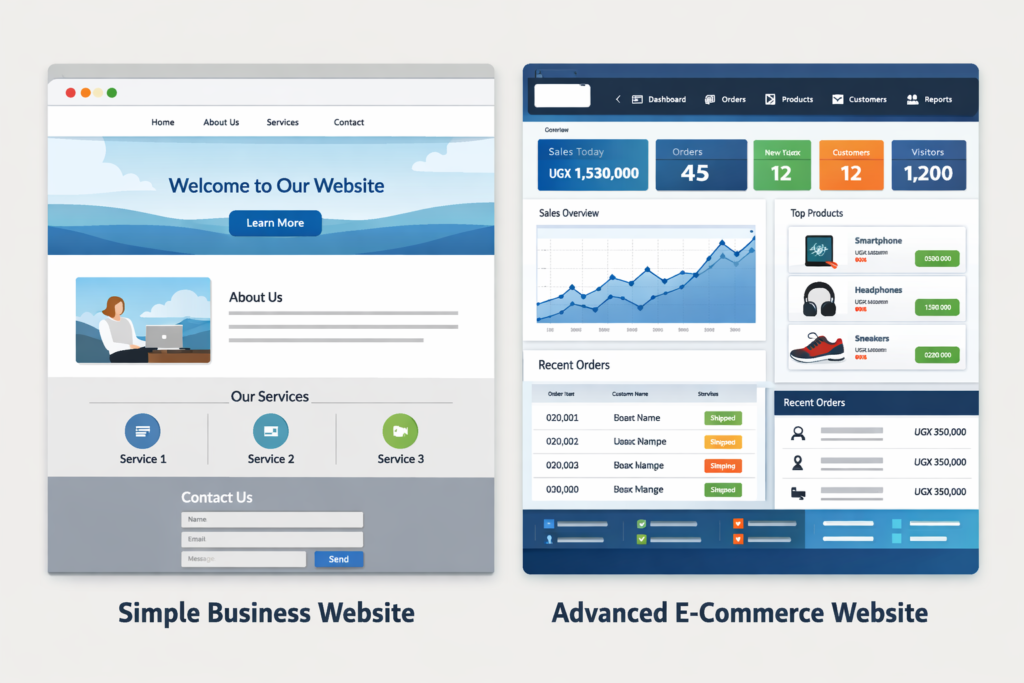
    1. Small Business Websites

    Perfect for:

    • shops
    • service providers
    • startups
    • consultants

    These usually include:

    • Home page
    • About page
    • Services
    • Contact page

    A small business website is often the first step toward building an online presence.


    2. Corporate Websites

    These are designed for larger companies and organizations.

    Features may include:

    • multiple service pages
    • team profiles
    • case studies
    • blog sections
    • investor information

    3. E-Commerce Websites

    These websites allow businesses to sell products online.

    Features include:

    • product listings
    • shopping carts
    • payment integration
    • order tracking

    Many Ugandan e-commerce websites integrate local payment methods such as Mobile Money.


    4. Portfolio Websites

    These are common for professionals such as:

    • photographers
    • designers
    • architects
    • freelancers

    They showcase previous work and build credibility.


    Website Design Cost in Uganda 💰

    One of the most common questions entrepreneurs ask is:

    “How much does website design cost in Uganda?”

    The answer depends on the type of website and its complexity.

    Basic Website

    Typical price:

    UGX 500,000 – UGX 1,500,000

    Best for:

    • startups
    • small businesses
    • personal brands

    These usually include 3–5 pages and basic features.


    Standard Business Website

    Typical price:

    UGX 1,500,000 – UGX 3,500,000

    Features often include:

    • blog system
    • SEO optimization
    • social media integration
    • Google Maps integration

    E-commerce Website

    Typical price:

    UGX 3,500,000 – UGX 10,000,000+

    These websites include:

    • product catalog
    • online payments
    • customer accounts
    • order management

    Custom Web Applications

    Typical price:

    UGX 5,000,000 – UGX 50,000,000+

    These platforms are used by organizations that need advanced systems like:

    • booking platforms
    • dashboards
    • internal portals

    Additional Website Costs to Consider

    Beyond development, businesses should also budget for:

    Domain Name

    Cost:

    UGX 40,000 – UGX 80,000 per year

    Examples:

    • yourbusiness.com
    • yourbusiness.co.ug

    Website Hosting

    Typical cost:

    UGX 100,000 – UGX 400,000 per year for shared hosting.

    Hosting keeps your website accessible online.


    Website Maintenance

    Many companies charge:

    UGX 150,000 – UGX 600,000 per month for updates and maintenance.


    Key Features of a Modern Website in Uganda

    Mobile-Friendly Design

    Most Ugandans access the internet using smartphones.

    A website must therefore be fully responsive.


    Fast Loading Speed

    Slow websites lose visitors.

    Speed optimization ensures users stay on your website longer.


    SEO Optimization

    Search engine optimization helps your website appear in searches like:

    • website design Uganda
    • best hotels Kampala
    • construction companies Uganda

    Without SEO, your website may never appear in Google results.


    Secure HTTPS Connection

    Security is essential for protecting customer data.

    Websites should use SSL certificates to ensure secure browsing.


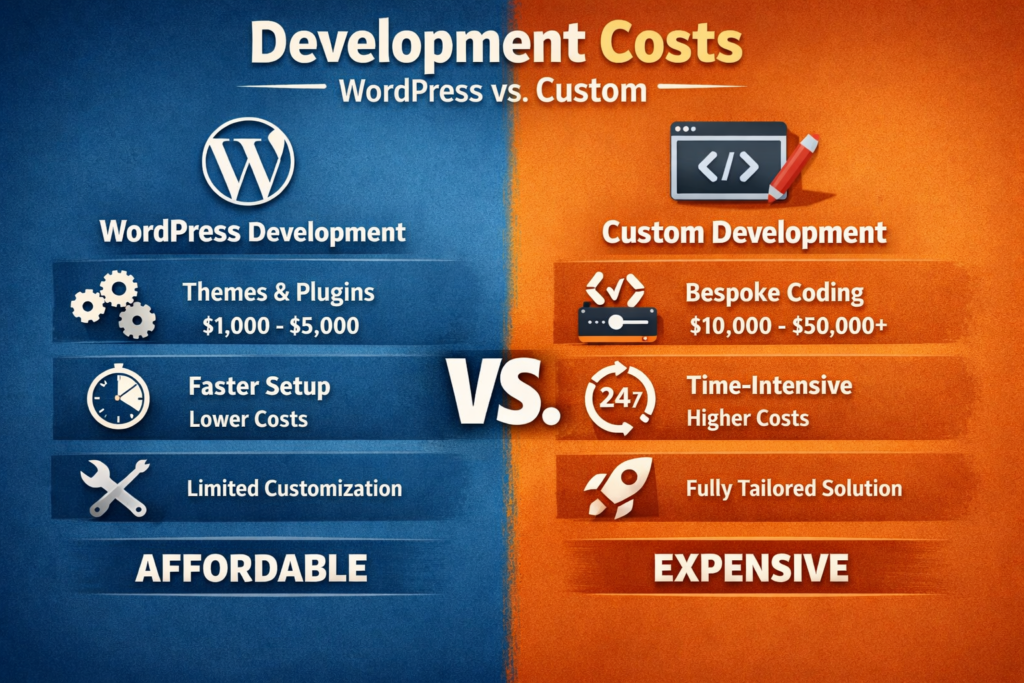
    WordPress vs Custom Website Development

    When building a website, most businesses choose between:

    WordPress

    Advantages:

    • faster development
    • lower cost
    • easy to manage
    • thousands of plugins

    WordPress powers a large portion of websites globally.


    Custom Development

    Advantages:

    • fully customized features
    • advanced systems
    • better for complex platforms

    However, custom development is usually more expensive and slower to build.

    For most businesses in Uganda, WordPress is the most practical solution.


    How to Choose a Website Designer in Uganda

    Choosing the right developer is important.

    Here are some key things to consider.

    Check Their Portfolio

    Look at previous websites they have built.

    This shows:

    • design quality
    • functionality
    • industry experience

    Ask About SEO

    A website should not only look good — it should also rank on Google.


    Ensure Mobile Optimization

    Mobile design is critical in Uganda where smartphone usage dominates.


    Ask About Support

    You should know:

    • who maintains the website
    • how updates are handled
    • how issues are fixed

    Website Design Trends in Uganda

    Web design is evolving quickly.

    Some trends becoming popular include:

    Minimalist Design

    Clean, simple layouts that improve readability.


    AI Website Builders

    AI tools now allow entrepreneurs to create websites faster and more affordably.

    Platforms such as AI website builders can automatically generate designs tailored to businesses.


    Mobile-First Design

    Designing websites primarily for mobile devices.


    SEO Tips for Websites in Uganda

    If you want your website to rank on Google, follow these strategies.

    Use Local Keywords

    Examples include:

    • website design Uganda
    • web design Kampala
    • website developers Uganda
    • web development Uganda

    Create Blog Content

    Blogs help your website rank for many search queries.

    Example blog topics:

    • Cost of website design in Uganda
    • Why Ugandan businesses need websites
    • SEO services in Kampala

    Optimize Google Business Profile

    Google Business listings help businesses appear in local search results.


    Build Backlinks

    Backlinks from trusted websites improve search rankings.


    Frequently Asked Questions (FAQ).

    How much does website design cost in Uganda?

    read more


    How long does it take to build a website?

    Most websites take 2–8 weeks to design and launch depending on complexity.


    Can a Ugandan business accept payments online?

    Yes.

    Many websites integrate:

    • Mobile Money
    • Airtel Money
    • online payment gateways

    Do small businesses really need websites?

    Yes.

    Even small businesses benefit from online visibility because customers often search online before choosing a service provider.


    Is WordPress good for Ugandan businesses?

    Yes.

    WordPress is affordable, flexible, and easy to manage, making it ideal for startups and SMEs.


    Conclusion

    Website design in Uganda is no longer a luxury — it is a necessity for any serious business.

    Whether you run a small shop, a startup, or a large company, a professional website can:

    • increase visibility
    • build trust
    • attract customers
    • generate revenue

    As internet usage continues to grow across Kampala and the rest of Uganda, businesses that invest in strong online platforms will gain a major competitive advantage.

    If you want your business to succeed in the digital economy, investing in professional website design in Uganda is one of the smartest decisions you can make.

  • Mobile App Development in Uganda 🇺🇬.

    Mobile App Development in Uganda 🇺🇬.

    A Complete Guide for Businesses and Startups (2026)

    Over the past decade, Uganda has experienced a major digital transformation. Smartphones are now everywhere — from busy streets in Kampala to small towns across the country. People use their phones to communicate, shop, learn, pay bills, and access services.

    Because of this shift, businesses are realizing that having a mobile app is no longer a luxury — it’s becoming a necessity.

    From transport and delivery services to banking and e-commerce, mobile applications are helping businesses reach customers faster and operate more efficiently.

    If you are a business owner, entrepreneur, or startup founder, understanding mobile app development in Uganda can help you unlock new opportunities for growth.

    In this guide, we will explore:

    • What mobile app development is
    • Why businesses in Uganda are investing in mobile apps
    • Types of mobile apps businesses can build
    • The development process
    • The cost of building an app in Uganda
    • How to choose the right development partner

    By the end of this article, you will have a clear understanding of how mobile apps can help your business grow in Uganda’s rapidly evolving digital economy.


    Why Mobile Apps Are Becoming Essential in Uganda 📱

    A few years ago, most businesses relied mainly on physical locations or social media pages to reach customers. Today, things are different.

    More people are using smartphones than ever before.

    Many Ugandans now access the internet primarily through their mobile devices, which means businesses must adapt to how customers interact with technology.

    Mobile apps offer several advantages that traditional websites or social media alone cannot provide.

    Convenience for Customers

    A mobile app allows customers to access your services instantly from their phones. Instead of searching for your business online every time, they simply open the app.

    For example:

    • A restaurant app allows customers to order food quickly.
    • A transport app allows users to request rides instantly.
    • A service app allows customers to book appointments in seconds.

    This level of convenience significantly improves customer satisfaction.


    Faster Communication

    Mobile apps allow businesses to send push notifications directly to users.

    This means companies can instantly notify customers about:

    • promotions
    • updates
    • new products
    • special offers

    Push notifications are often far more effective than emails or social media posts.


    Better Customer Loyalty

    When customers install your app, your brand stays on their phone. Every time they look at their device, they see your app icon.

    This constant visibility strengthens brand recognition and loyalty.


    Competitive Advantage

    Many industries in Uganda are still early in the digital transformation process. Businesses that invest in mobile apps now often gain a significant competitive advantage.

    Companies that offer convenient digital services tend to attract more customers than those that rely only on traditional methods.


    What Is Mobile App Development? 💻

    Mobile app development is the process of creating software applications that run on smartphones and tablets.

    These applications are specifically designed for mobile operating systems such as:

    • Android
    • iOS (Apple devices)

    Developing a mobile app involves multiple steps including planning, design, development, testing, and deployment.

    Unlike websites, mobile apps are installed directly on users’ devices and can interact with device features such as:

    • GPS location
    • camera
    • notifications
    • offline storage

    Because of this deeper integration, mobile apps can deliver a more powerful and personalized experience for users.


    Types of Mobile Apps Businesses in Uganda Can Build

    Mobile apps can serve many different purposes depending on the needs of the business.

    Below are some of the most common types of apps developed in Uganda.


    Business Service Apps

    Many companies build apps that allow customers to book or request services easily.

    Examples include:

    • salon booking apps
    • cleaning service apps
    • repair service apps
    • consultation booking apps

    These apps simplify the customer journey and help businesses manage appointments more efficiently.


    E-Commerce Apps

    Online shopping is growing quickly in Uganda.

    E-commerce apps allow customers to:

    • browse products
    • place orders
    • make payments
    • track deliveries

    Many retail businesses now combine online stores with mobile apps to reach customers beyond physical locations.


    Transport and Delivery Apps

    Ride-hailing and delivery apps are among the fastest-growing app categories.

    Examples include apps that allow users to:

    • request taxis
    • order food
    • send packages

    These apps rely heavily on features such as GPS tracking and real-time updates.


    Fintech and Payment Apps

    Financial technology is expanding rapidly in Uganda due to the popularity of mobile money services.

    Mobile apps in this category include:

    • payment platforms
    • digital wallets
    • loan applications
    • investment apps

    These solutions make financial services more accessible to millions of people.


    Educational Apps

    Educational institutions and training platforms are increasingly developing mobile apps to deliver digital learning experiences.

    Features often include:

    • video lessons
    • quizzes and assignments
    • progress tracking
    • course materials

    Mobile learning apps make education more accessible to students across the country.


    Technologies Used for Mobile App Development

    There are different technologies used to build mobile applications. The choice depends on factors such as budget, performance requirements, and the target audience.


    Native Mobile Apps

    Native apps are built specifically for one operating system.

    For example:

    • Android apps use Java or Kotlin
    • iOS apps use Swift

    Native apps usually provide the best performance and full access to device features.

    However, they often require separate development for Android and iOS.


    Cross-Platform Apps

    Cross-platform frameworks allow developers to build apps for both Android and iOS using a single codebase.

    Popular frameworks include:

    • Flutter
    • React Native

    These technologies significantly reduce development time and cost.

    Many startups prefer cross-platform solutions when launching their first mobile applications.


    The Mobile App Development Process

    Building a successful mobile app involves several important stages.


    1. Idea and Planning

    The first step is defining the purpose of the application.

    This includes identifying:

    • the target users
    • the main features
    • the problem the app solves

    A clear plan helps avoid costly mistakes later in development.


    2. User Interface and Experience Design

    Designers create the visual layout of the application.

    This stage focuses on making the app:

    • easy to use
    • visually appealing
    • intuitive for users

    A well-designed interface can significantly impact how users interact with the app.


    3. Development

    Developers write the code that powers the application.

    This includes building both:

    • the mobile interface
    • backend systems that store data and manage features

    4. Testing

    Before launching an app, developers test it on different devices to ensure it works correctly.

    Testing helps identify issues such as:

    • bugs
    • crashes
    • performance problems

    5. Launch and Deployment

    Once the app is ready, it is published on platforms such as:

    • Google Play Store
    • Apple App Store

    After launch, developers often continue improving the app based on user feedback.


    How Much Does Mobile App Development Cost in Uganda? 💰

    The cost of building a mobile app can vary widely depending on the features and complexity involved.

    Below is a general estimate for the Ugandan market.

    Type of AppEstimated Cost
    Simple mobile app$500 – $1500
    Business service app$1500 – $5000
    E-commerce mobile app$3000 – $8000
    Advanced custom platform$8000+

    Several factors influence the cost of development.

    These include:

    • number of features
    • complexity of design
    • backend systems required
    • integration with payment platforms
    • maintenance and updates

    Mobile Apps vs Websites: Which One Do You Need?

    Many business owners wonder whether they should invest in a mobile app or a website.

    The truth is that both serve different purposes.

    Websites are excellent for:

    • appearing on Google search results
    • providing detailed information
    • attracting new customers

    Mobile apps are better for:

    • frequent users
    • fast access to services
    • personalized experiences

    For many companies, the best strategy is to have both a professional website and a mobile app working together.


    Choosing the Right Mobile App Development Company in Uganda

    Selecting the right development partner is one of the most important decisions when building a mobile application.

    Here are some key factors to consider.


    Experience and Portfolio

    Review the company’s previous projects to see the quality of their work.

    Experienced developers are more likely to deliver reliable solutions.


    Technology Expertise

    Ensure the development team understands modern technologies such as Flutter or React Native.

    These frameworks help create efficient cross-platform apps.


    Communication and Support

    Good communication is essential throughout the development process.

    Choose a team that provides clear updates and ongoing support after launch.


    The Future of Mobile Apps in Uganda 🚀

    Uganda’s technology ecosystem is expanding quickly. Startups, digital services, and online platforms are becoming more common across many industries.

    As smartphone adoption continues to rise, mobile applications will play an even bigger role in how businesses operate.

    Companies that invest in mobile technology today will be better positioned to compete in the digital marketplace of tomorrow.


    Final Thoughts

    Mobile app development is transforming the way businesses connect with customers in Uganda.

    By offering convenient digital services, companies can improve customer experiences, increase efficiency, and unlock new opportunities for growth.

    Whether you are launching a startup or expanding an existing business, investing in a well-designed mobile application can be one of the most powerful steps toward digital success.


    Frequently Asked Questions

    How much does it cost to build a mobile app in Uganda?

    Most mobile apps cost between $500 and $5000, depending on complexity and features.


    How long does it take to develop an app?

    Simple apps may take 4–8 weeks, while complex applications may require 3–6 months.


    Can mobile apps support mobile money payments?

    Yes. Many mobile apps in Uganda integrate mobile money and other digital payment systems.


    Is it better to build Android or iOS apps first?

    Since most smartphone users in Uganda use Android devices, many businesses start with Android apps first before expanding to iOS.

  • Website Design services & Web Hosting Solutions in Uganda.

    Website Design services & Web Hosting Solutions in Uganda.

    The Complete Guide for Businesses in 2026

    In today’s digital world, having a professional website is no longer optional for businesses in Uganda. Whether you run a small shop, a startup, a hotel, or a large company, customers are increasingly searching online before making decisions.

    When someone searches for services on Google such as “best hotels in Kampala,” “car rental Uganda,” or “best restaurants in Uganda,” businesses with professional websites are far more likely to attract customers.

    This is why website design services and reliable web hosting solutions in Uganda have become essential for businesses that want to grow online.

    In this guide, we will explain everything you need to know about website design, web hosting, costs, and how to choose the best solution for your business.


    Why Every Business in Uganda Needs a Website 🌍

    Many businesses in Uganda rely heavily on social media platforms like Facebook, Instagram, or WhatsApp to communicate with customers. While these platforms are helpful, they cannot replace the power of a professional website.

    A website gives your business several important advantages:

    1. Increased Credibility

    Customers trust businesses that have professional websites more than those that only rely on social media.

    2. 24/7 Online Presence

    Your website works for your business even when you are asleep. Customers can learn about your services at any time.

    3. Higher Visibility on Google

    With proper search engine optimization (SEO), your website can appear in Google search results when customers search for services in Uganda.

    4. Better Customer Experience

    A website allows customers to easily access information such as pricing, services, contact information, and location.

    5. More Business Opportunities

    A well-designed website helps convert visitors into paying customers.


    What Are Website Design Services? 💻

    Website design services involve the process of creating and designing a website that is attractive, functional, and easy for users to navigate.

    Professional website designers focus on several key elements to ensure the website performs well.

    Modern and Professional Design

    A website should reflect your brand identity and present your business professionally.

    Mobile-Friendly Layout

    More than 80% of internet users in Uganda access websites using smartphones. A mobile-friendly design ensures the website works well on phones and tablets.

    Fast Loading Speed

    Users expect websites to load quickly. Slow websites cause visitors to leave before viewing your services.

    Search Engine Optimization (SEO)

    SEO helps your website rank higher on Google when customers search for services related to your business.

    Security

    Professional websites include security features such as SSL certificates and protection against hackers.


    What Is Web Hosting? 🌐

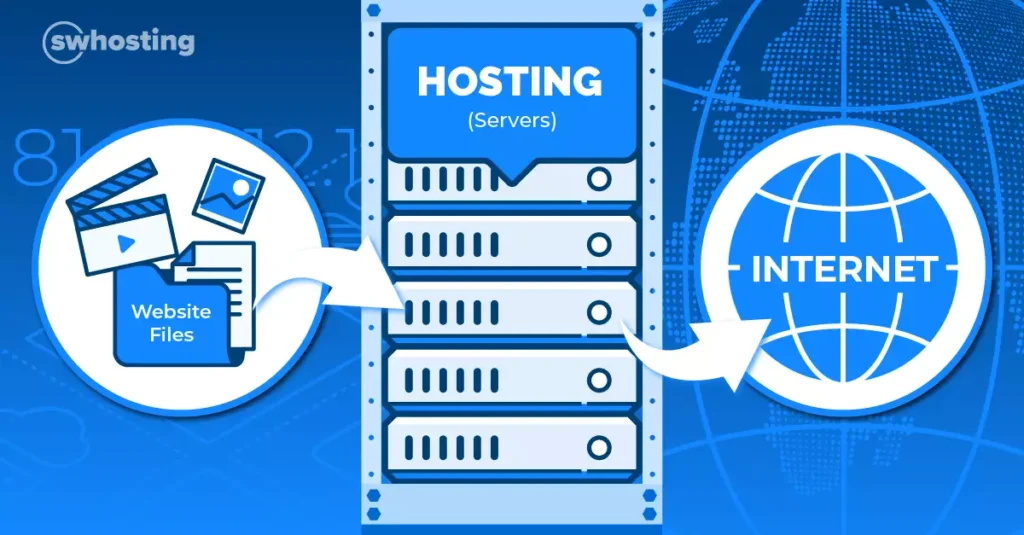
    Web hosting is the service that stores your website files on a server and makes them accessible on the internet.

    Think of web hosting as the land where your website is built. Without hosting, your website cannot be accessed online.

    When someone types your domain name into a browser, the hosting server delivers the website files and displays the pages instantly.

    Choosing the right web hosting provider is critical because it affects your website’s speed, reliability, and security.


    Types of Web Hosting Solutions in Uganda

    Different types of hosting solutions are available depending on the size and needs of your website.

    Shared Hosting

    Shared hosting is the most affordable hosting option and is ideal for small websites or startups.

    In shared hosting, multiple websites share the same server resources.

    Advantages include:

    • Affordable pricing
    • Easy setup
    • Suitable for beginners

    VPS Hosting

    Virtual Private Server (VPS) hosting provides more resources and better performance compared to shared hosting.

    It is suitable for growing businesses that expect higher website traffic.

    Benefits include:

    • Faster performance
    • More control over the server
    • Improved reliability

    Dedicated Hosting

    Dedicated hosting means your website has its own server.

    This is typically used by large companies or websites with very high traffic.

    Advantages include:

    • Maximum performance
    • Full server control
    • High security

    Key Features to Look for in Web Hosting 🔍

    When selecting web hosting solutions in Uganda, consider the following features.

    Reliable Uptime

    A good hosting provider should guarantee at least 99.9% uptime to ensure your website is always accessible.

    Fast Server Speed

    Fast websites improve user experience and help improve Google rankings.

    Security Features

    Your hosting should include:

    • SSL certificates
    • Malware protection
    • Regular backups

    Customer Support

    Technical problems can occur at any time. Reliable support helps resolve issues quickly.


    Website Design vs. Website Development

    Many people use these terms interchangeably, but they have different meanings.

    Website Design

    Focuses on the appearance, layout, and user experience of the website.

    Website Development

    Focuses on the technical coding and functionality behind the website.

    Most modern websites combine both design and development to create a complete solution.


    Why WordPress Is the Most Popular Website Platform 🌟

    Today, a large percentage of websites on the internet are built using WordPress.

    WordPress is popular because it offers many advantages for businesses and developers.

    Benefits include:

    • Easy website management
    • Thousands of plugins and themes
    • SEO-friendly structure
    • Flexible customization
    • Lower development costs compared to building websites from scratch

    For many businesses in Uganda, WordPress offers the fastest and most cost-effective way to launch a professional website.


    How Much Does Website Design Cost in Uganda? 💰

    Website costs vary depending on the features and complexity required. more details on our article here

    Below are typical price ranges.

    Basic Business Website

    A simple website with a few pages usually costs between $200 and $600.

    E-commerce Website

    Online stores that allow customers to purchase products typically cost between $500 and $2000.

    Custom Web Applications

    Large custom platforms with advanced functionality may cost $2000 or more.


    Typical Web Hosting Costs

    Web hosting costs depend on the hosting type and resources required.

    Shared hosting usually costs between $40 and $120 per year, while VPS hosting may range from $200 to $600 per year.

    Dedicated servers are more expensive but provide the highest performance.


    Benefits of Choosing a Company That Offers Both Services

    Many businesses prefer working with a provider that offers both website design and web hosting services.

    Advantages include:

    • Easier management of website services
    • Faster support when problems occur
    • Better website performance optimization
    • Lower overall costs

    How to Choose the Best Website Design and Hosting Provider in Uganda

    Choosing the right provider is important for long-term success.

    Before selecting a company, consider the following:

    Experience

    Choose a company with experience building websites for different industries.

    Portfolio

    Review their previous work to see the quality of websites they create.

    Customer Reviews

    Positive feedback from clients indicates reliability and good service.

    Technical Expertise

    Ensure the company understands SEO, website speed optimization, and security.


    The Future of Digital Business in Uganda 🚀

    Uganda’s digital economy is growing rapidly as more businesses adopt online platforms.

    Companies that invest in professional websites will have a significant advantage over competitors that rely only on social media.

    A well-designed website combined with reliable web hosting ensures that your business remains visible, professional, and competitive in the digital marketplace.


    Final Thoughts

    Website design and web hosting are two essential components for building a strong online presence.

    For businesses in Uganda, investing in professional website design services and reliable hosting solutions can lead to greater visibility, increased customer trust, and more opportunities for growth.

    As more consumers search online for services, businesses with fast, secure, and professional websites will be the ones that stand out.


    Frequently Asked Questions (FAQ)

    How much does a website cost in Uganda?

    read our article

    Which hosting is best for small businesses?

    Shared hosting is typically the most affordable and suitable option for small businesses starting their online presence.

    How long does it take to design a website?

    Most business websites can be completed within 1 to 3 weeks depending on complexity.

    Can I update my website myself?

    Yes. Platforms like WordPress allow website owners to update content, images, and pages easily without advanced technical skills.

  • Why WordPress Is Better Than Developing a Website From Scratch (For Most Businesses) 🚀

    Why WordPress Is Better Than Developing a Website From Scratch (For Most Businesses) 🚀

    When discussing website development, it’s widely accepted that the most expert method is to code a website from the ground up using HTML, CSS, JavaScript, and PHP.

    While custom development has its place, the reality is that for most businesses, WordPress is the faster, smarter, and more practical choice.

    WordPress powers over 40% of all websites on the internet, from small local businesses to major global brands. Its flexibility, ease of use, and extensive ecosystem make it a powerhouse for modern web development.

    In this article, we’ll explore why WordPress often outshines building a website from scratch, particularly for business websites, blogs, portfolios, and online stores.


    1. Faster Website Development ⚡

    One of the most obvious benefits of WordPress is speed.

    When you build a website from scratch, developers must create everything manually, including:

    • Page layouts
    • Navigation systems
    • Mobile responsiveness
    • Admin panels
    • Content management tools
    • Security systems

    This process can take weeks or even months before the website is ready to launch.

    With WordPress, developers can launch a fully functional website in just a few days.

    Why is this possible? Because WordPress already includes:

    • A powerful content management system (CMS)
    • Pre-built design themes
    • Thousands of plugins for almost any feature
    • Built-in media management

    This means developers can focus on customization and branding, rather than reinventing the wheel. For businesses, this translates to faster launches, quicker customer acquisition, and reduced time-to-market.


    2. No Need to Reinvent the Wheel 🔧

    When building from scratch, developers must code everything—even features that already exist in other tools:

    • Contact forms
    • Image galleries
    • SEO optimization
    • Performance optimization tools
    • Security measures
    • Analytics tracking

    WordPress solves this with thousands of plugins that provide these features instantly.

    Some popular examples include:

    • Elementor – Build beautiful, responsive page layouts without coding
    • WooCommerce – Create fully functional online stores
    • Yoast SEO – Optimize websites for search engines easily

    Instead of spending countless hours coding these systems, you can install a plugin, configure it, and start using it immediately.


    3. Easy for Clients to Manage 🧑‍💻

    A major challenge with custom-built websites is client usability.

    Imagine a business owner who wants to:

    • Update a blog post
    • Change text on a page
    • Upload new images
    • Add a new product

    If the site was coded from scratch, they’d often need to contact the developer every time, creating dependency and slowing down business operations.

    WordPress solves this with its simple, intuitive dashboard. Clients can:

    • Edit pages and posts
    • Publish blog articles
    • Upload images and videos
    • Update products or services

    All of this without touching any code, giving business owners full control over their content.


    4. Built for SEO and Search Visibility 🔍

    A website is useless if no one can find it.

    WordPress makes SEO easier thanks to plugins like Yoast SEO. These tools help optimize:

    • Page titles
    • Meta descriptions
    • Keyword placement
    • XML sitemaps
    • Content readability

    They even provide real-time suggestions to help your website rank higher on Google.

    If you build a site from scratch, you’d need to manually configure all these SEO components, which is time-consuming and complex. WordPress automates much of the process, allowing businesses to focus on creating quality content that attracts visitors.


    5. Cost-Effective for Businesses 💰

    Custom web development is expensive because everything has to be coded from scratch.

    WordPress dramatically reduces costs because:

    • The core software is free
    • Many themes are affordable
    • Plugins add complex functionality quickly

    This allows businesses to get high-quality websites without blowing their budget. For small businesses, startups, and entrepreneurs, this is a game-changer.

    The money saved can be redirected to:

    • Marketing campaigns
    • Paid ads
    • Content creation
    • Business growth

    6. Huge Global Community 🌍

    WordPress boasts a massive global community of developers, designers, and users.

    This brings several advantages:

    • Tutorials are everywhere online
    • Problems usually have documented solutions
    • Developers and agencies are easy to hire

    If something goes wrong with a custom-built website, you might need the original developer to fix it. With WordPress, support resources are nearly unlimited, making it reliable and sustainable.


    When Building a Website From Scratch Makes Sense 🧠

    While WordPress is ideal for most websites, there are situations where custom development is necessary, such as:

    • Advanced web applications
    • SaaS platforms
    • Highly complex systems
    • Custom enterprise software

    These require unique backend architecture that a CMS like WordPress may not handle efficiently.

    In such cases, frameworks like Laravel, Django, or React-based solutions might be more appropriate.


    Types of Websites WordPress Excels At 🏆

    WordPress is perfect for:

    • Business websites & company profiles
    • Blogs & news websites
    • Portfolio websites
    • E-commerce stores
    • Personal brands

    With tools like WooCommerce, even full-featured online stores with payment gateways, inventory management, and shipping systems can be built quickly.


    Final Thoughts 🎯

    Web development isn’t about suffering through unnecessary code. The goal is to deliver professional websites efficiently and effectively.

    For most projects—including business websites, blogs, portfolios, and online stores—WordPress provides the ideal balance of speed, flexibility, and cost-efficiency.

    Smart developers don’t always start from zero—they choose the best tools to deliver results faster. In many cases, that tool is WordPress.

    🚀 Whether you’re a startup, small business, or personal brand, WordPress helps you launch faster, stay in control, and scale efficiently.

  • How to Register a Domain in Uganda: Step-by-Step Guide (2026)

    How to Register a Domain in Uganda: Step-by-Step Guide (2026)

    Creating a website in Uganda starts with one crucial step: registering your domain name. A domain is your website’s unique address on the internet, and having the right domain builds credibility, strengthens your brand, and helps people find your business online.

    In Uganda, domain registration has specific requirements, especially for .ug domains, but you can also register international domains such as .com. This guide explains how to register a domain in Uganda, step by step, with examples, tips, and guidance for beginners and businesses.


    What is a .UG Domain?

    A .ug domain is Uganda’s country code top-level domain (ccTLD). It is ideal for businesses, organizations, and individuals who want a local online presence.

    Types of .UG Domains:

    • .co.ug – Commercial businesses
    • .ac.ug – Academic institutions
    • .org.ug – Non-profit organizations
    • .or.ug – Other organizations
    • .go.ug – Government institutions

    All .ug domain registration is managed by i3c, the official registry. You can check availability and register directly at i3c.

    While you can register directly, working with a local expert ensures accuracy, correct DNS setup, and a smooth website launch. At web systems Uganda, we provide guidance for Ugandans registering .ug domains or international domains like .com.


    Step 1: Choose a Strong Domain Name

    Choosing the right domain name is essential. A good domain name should:

    • Be short, easy to spell, and memorable
    • Reflect your business, project, or personal brand
    • Avoid numbers, hyphens, or complicated characters

    Pro Tip: Consider reserving both the .ug and .com versions to protect your brand.

    Example:
    A café in at Kampala road could use freshbrew.co.ug and freshbrew.com to secure both local and global presence.


    Step 2: Decide Where to Register

    Registering a .UG Domain

    • Use i3c, the official registry for all .ug domains.
    • Search for availability and register at i3c

    Registering International Domains (.com, .net, .org)

    • Use a reliable registrar like Hostinger.
    • Hostinger provides both domains and hosting, simplifying setup for your website.

    Pro Tip: You can use my Hostinger referral link for registration and hosting guidance. This ensures your domains are properly configured and your website is live quickly.


    Step 3: Check Domain Availability

    • Search for your preferred .ug domain on i3c.
    • Search for international domains (.com, .net) on your registrar.
    • If your first choice is taken, try variations or other extensions.

    Example:

    • Preferred: greenenergy.co.ug
    • Alternative if taken: greenenergyuganda.co.ug or greenenergy.com

    Step 4: Provide Registration Details

    For .ug domain registration, you need:

    • Full name or business name
    • Physical address in Uganda
    • Email address and phone number
    • Supporting documents for certain extensions (.ac.ug or .or.ug)

    For international domains, basic personal or business information is sufficient.

    Accuracy is essential—incorrect details can delay registration or lead to domain rejection.


    Step 5: Pay for Your Domain

    • .ug domains: Fees are set by i3c, paid annually.
    • International domains (.com, .net): Fees vary by registrar. Discounts are often available for first-time buyers and is paid in dollars. You can contact us for assistance in case of any challenges.

    Once payment is completed, your domain is officially yours.


    Step 6: Connect Your Domain to a Website

    After registration, you need to link your domain to a hosting service. This process ensures your website is visible online. Steps include:

    • Setting up hosting (I can guide you with Hostinger or another reliable host)
    • Pointing your .ug or .com domain to your hosting server, try and make sure you choose a good hosting provider because also having a bad hosting provider can ruin your entire website
    • Configuring professional email accounts using your domain (e.g., info@yourdomain.co.ug).

    Many people struggle with this step, which can delay launching a website. Professional guidance ensures everything works perfectly.


    Step 7: Keep Your Domain Secure and Updated

    • Renew your domain before it expires to avoid losing it.
    • Update your contact information with the registry if it changes.
    • Consider registering multiple extensions to protect your brand from competitors.
    • Also ensure enabling SSL to have your website secured.

    Step 8: Why Work With an Expert

    While how to register a domain in Uganda may seem simple, mistakes are common:

    • Incorrect details can delay approval
    • DNS setup errors may prevent the website from going live
    • Managing multiple domains (.ug, .com, .net) can be confusing

    At web systems Uganda we help Ugandans navigate .ug domain registration, international domains, hosting setup, and more—ensuring a smooth and stress-free process.

    You can contact us directly or use Hostinger to register and host your domains in one place. We have found them to be the best domain provider around.


    Step 9: Final Thoughts

    Learning how to register a domain in Uganda is the first step toward establishing your online presence. With the right domain, proper registration, and reliable hosting, you can create a professional website that represents your brand confidently.

    Start today! Secure your .ug domain and international domains like .com, and get your website online without stress.


  • How Much Does a Website Cost in Uganda? (Complete 2026 Pricing Guide)

    How Much Does a Website Cost in Uganda? (Complete 2026 Pricing Guide)

    If you’re planning to build a website, one of the first questions that comes to mind is:

    How much is a website in Uganda?

    Whether you’re a small business owner in Kampala, a startup founder, a school administrator, or an NGO director, understanding the real website design cost in Uganda helps you budget properly and avoid being overcharged.

    In this complete guide, we break down everything that affects the website price in Uganda, what you should expect to pay, and how to avoid common mistakes.

    Why Website Prices in Uganda Vary So Much

    If you’ve asked around, you’ve probably received very different quotes:

    • UGX 300,000
    • UGX 800,000
    • UGX 1,500,000
    • UGX 5,000,000+

    So why such a big difference?

    Because not all websites are the same.

    A website can be:

    • A simple 5-page informational site
    • A business website with contact forms
    • An e-commerce store
    • A booking platform
    • A custom web application

    Each type requires different time, expertise, and technology.


    Average Website Design Cost in Uganda (2026 Estimates)

    Here’s a realistic breakdown of website prices in Uganda:

    1️⃣ Basic Business Website

    UGX 600,000 – 1,200,000

    Includes:

    • 5–7 pages (Home, About, Services, Contact, etc.)
    • Mobile responsive design
    • Contact form
    • Basic SEO setup
    • Social media links

    Best for:

    • Small businesses
    • Consultants
    • Service providers
    modern website

    2️⃣ Professional Business Website

    UGX 1,200,000 – 3,000,000

    Includes:

    • 8–15 pages
    • Custom design
    • Blog integration
    • SEO optimization
    • WhatsApp integration
    • Google Maps
    • Speed optimization

    Best for:

    • Growing businesses
    • Schools
    • Real estate companies
    • Established brands

    3️⃣ E-Commerce Website (Online Store)

    UGX 2,500,000 – 6,000,000+

    Includes:

    • Product listings
    • Shopping cart
    • Online payments (MTN MoMo, Airtel Money, card payments)
    • Order management system
    • Inventory management
    • Customer accounts

    Best for:

    • Retail shops
    • Fashion brands
    • Electronics stores
    • Supermarkets

    4️⃣ Custom Web Application

    UGX 5,000,000 – 20,000,000+

    Includes:

    • Custom features
    • User dashboards
    • Admin panel
    • Complex integrations
    • Database systems

    Best for:

    • Large companies
    • Tech startups
    • SaaS platforms
    • Institutions

    What Determines the Website Price in Uganda?

    Several factors affect the final cost:

    1. Number of Pages

    More pages = more design and content work.

    2. Custom Design vs Template

    Templates are cheaper.
    Fully custom designs cost more.

    3. E-commerce Features

    Payment gateways, inventory systems, and delivery tracking increase complexity.

    4. SEO Optimization

    If you want your website to rank on Google, proper SEO setup matters.

    5. Content Creation

    Who writes the website content?
    Professional copywriting adds cost — but increases conversions.

    6. Hosting & Domain Costs

    This is separate from design.


    Additional Costs to Consider

    When calculating how much a website costs in Uganda, don’t forget ongoing costs:

    Domain Name

    UGX 50,000 – 80,000 per year
    (.com, .ug, .co.ug)

    Hosting

    UGX 250,000 – 600,000 per year
    (depending on speed and storage)

    Maintenance (Optional but Recommended)

    UGX 300,000 – 1,000,000 per year

    Maintenance includes:

    • Updates
    • Security monitoring
    • Backups
    • Technical support

    Why Cheap Websites Can Cost You More

    Some developers charge UGX 300,000 for a website.

    Sounds attractive, right?

    But often:

    • No proper SEO
    • Slow loading speed
    • Poor design
    • No security setup
    • No support
    • Copied templates
    • No strategy behind it

    A website is an investment — not an expense.

    If your website looks unprofessional, customers may not trust your business.


    How to Choose the Right Web Design Company in Uganda

    Before hiring a developer, ask:

    • Do they show past projects?
    • Do they offer SEO?
    • Is the website mobile responsive?
    • Do they provide support after launch?
    • Is hosting included?
    • Do they explain the full cost clearly?

    A professional company should be transparent about the total website price in Uganda.


    Is It Worth Investing in a Website in Uganda?

    Absolutely.

    Today, most customers search online before buying.

    A professional website:

    • Builds trust
    • Increases visibility
    • Attracts new clients
    • Works for you 24/7
    • Makes your brand look serious

    Even small businesses in Uganda are now competing online.

    If you’re not online, you’re invisible.


    Final Answer: How Much Is a Website in Uganda?

    Here’s the short answer:

    Website TypeEstimated Cost (UGX)
    Basic Website600,000 – 1,200,000
    Professional Website1,200,000 – 3,000,000
    E-commerce Website2,500,000 – 6,000,000+
    Custom System5,000,000 – 20,000,000+

    The final website design cost in Uganda depends on your goals, features, and long-term strategy.


    Need a Professional Website in Uganda?

    If you’re ready to build a fast, secure, and professionally designed website tailored to your business goals, it’s important to work with a team that understands both design and strategy.

    A well-built website doesn’t just look good — it generates leads and grows your business.