
Category: Uncategorized

  • Is It Better for a Ugandan Hotel to Have Its Own Website or Use Booking.com?

    Is It Better for a Ugandan Hotel to Have Its Own Website or Use Booking.com?

    If you own a hotel, lodge, guest house, or safari camp in Uganda, you’ve probably asked yourself this question:

    Should I rely on Booking.com, or should I invest in my own website?

    The short answer is you should use both—but your own website should be the foundation of your online presence.

    As the founder of Websystems Uganda (websystemsug.com), I help businesses build professional websites that increase credibility, attract customers, and strengthen their brands. While platforms like Booking.com are excellent for reaching new travelers, they should never be your hotel’s only online presence.

    Here’s why.

    Understanding the Difference

    Think of Booking.com as renting a shop inside a busy shopping mall.

    Your hotel website is like owning your own building.

    Both have value, but only one gives you complete control.

    Booking.com helps travelers discover your hotel, compare prices, and make reservations quickly. Your website tells your story, showcases your unique experience, builds trust, and allows guests to connect with your business directly.

    Advantages of Booking.com

    Booking.com offers several benefits, especially for new hotels.

    • Millions of travelers already use it.
    • Your hotel gains international exposure.
    • Guests can book instantly.
    • Reviews help build credibility.
    • You don’t need to market from scratch.

    For a new hotel in Uganda, this visibility can be extremely valuable.

    However, there are limitations.

    The Downsides of Relying Only on Booking.com

    Many hotel owners don’t realize that relying entirely on Booking.com means giving up a significant amount of control.

    Some of the challenges include:

    • Paying commission on bookings.
    • Competing directly with nearby hotels on the same page.
    • Limited opportunities to showcase your brand.
    • Guests often remember Booking.com more than your hotel.
    • You have fewer opportunities to build long-term relationships with customers.

    If Booking.com changes its policies, rankings, or commission structure, your business is affected immediately.

    That is why depending on a single booking platform can be risky.

    Why Every Ugandan Hotel Should Have Its Own Website

    A professional website works for your hotel 24 hours a day.

    Unlike social media or booking platforms, your website belongs entirely to your business.

    A modern hotel website helps you:

    • Build trust with local and international guests.
    • Display high-quality photos and videos.
    • Tell your hotel’s story.
    • Publish room rates and special offers.
    • Accept direct booking inquiries.
    • Connect guests through WhatsApp.
    • Display your Google Maps location.
    • Share guest testimonials.
    • Publish blogs about nearby attractions.
    • Improve your visibility on Google Search.

    Most travelers search Google before making a booking.

    If your hotel doesn’t have its own website, you’re missing opportunities to be discovered.

    Direct Bookings Mean More Control

    One of the biggest advantages of having your own website is encouraging direct bookings.

    When guests find your hotel through Google or recommendations, they can contact you directly instead of going through a third-party platform.

    That gives your hotel more flexibility to:

    • Build customer relationships.
    • Promote repeat visits.
    • Share exclusive offers.
    • Collect inquiries directly.
    • Strengthen your own brand.

    Common Mistakes Ugandan Hotels Make

    Over the years, I’ve noticed many hotel websites have similar problems.

    Some common mistakes include:

    • Outdated designs.
    • Slow loading speeds.
    • Poor-quality photos.
    • No mobile optimization.
    • Missing SSL security.
    • No clear booking or inquiry form.
    • No WhatsApp button.
    • Missing Google Maps integration.
    • No room pricing.
    • No search engine optimization (SEO).
    • No regular updates.

    A website should make it easy for visitors to trust your hotel and contact you within seconds.

    The Best Strategy: Use Both

    This is the strategy I recommend.

    Use Booking.com to attract travelers who are already searching for accommodation.

    At the same time, invest in your own website to build your brand, attract visitors through Google, and encourage direct inquiries.

    Instead of competing against each other, the two platforms should work together.

    For example:

    A traveler discovers your hotel on Booking.com.

    Later, they search your hotel name on Google.

    They find your professional website, browse your gallery, read about your services, explore nearby attractions, and decide to contact you directly for future stays.

    That’s the power of owning your online presence.

    Features Every Hotel Website Should Have

    A modern Ugandan hotel website should include:

    • Professional homepage
    • Online booking or booking inquiry form
    • WhatsApp integration
    • Mobile Money payment options where appropriate
    • Secure HTTPS connection
    • Google Maps
    • Photo gallery
    • Video gallery
    • Room pages
    • Pricing information
    • Restaurant information
    • Conference facilities
    • Airport transfer details
    • Tour packages
    • Guest reviews
    • Frequently Asked Questions
    • Contact page
    • Fast loading speed
    • Mobile-friendly design
    • Search engine optimization
    • Blog section

    These features help convert visitors into paying guests.

    My Recommendation

    If I were advising any hotel owner in Uganda today, I would never recommend choosing only one option.

    Use Booking.com because it brings exposure.

    Own your website because it builds your business.

    Booking platforms come and go, but your website remains one of the most valuable digital assets your hotel can own.

    Frequently Asked Questions

    Can a small hotel in Uganda benefit from having a website?

    Absolutely. Even small guest houses and lodges benefit from having a professional website because it increases credibility and makes it easier for guests to find accurate information.

    Is Booking.com enough?

    No. Booking.com is an excellent marketing channel, but it shouldn’t replace your hotel’s official website.

    Can my website work together with Booking.com?

    Yes. Your website can include links to Booking.com while also encouraging guests to contact you directly for future bookings and inquiries.

    How much does a hotel website cost?

    The cost depends on the features required, such as online booking, payment integration, galleries, SEO, and custom design. Investing in a professional website is often more cost-effective than relying solely on third-party booking platforms over the long term.

    Final Thoughts

    Your hotel deserves more than just a listing on someone else’s platform.

    A professional website gives you control over your brand, helps guests trust your business, and creates opportunities for direct bookings and long-term growth.

    Booking.com is an excellent partner—but it should never become your entire online strategy.

    The most successful hotels use both.

    Need a Professional Hotel Website?

    At Websystems Uganda, we design modern, fast, mobile-friendly hotel websites that help accommodation businesses stand out online.

    Whether you run a hotel, lodge, safari camp, guest house, or resort, we can help you create a website that showcases your property, supports direct bookings, and strengthens your brand.

    A well-crafted hotel website not only enhances your brand’s visibility but also fosters a direct connection with potential guests, leading to increased reservations. While platforms like Booking.com offer valuable exposure, relying solely on them can limit your potential for growth and customer loyalty. By leveraging both your own website and third-party platforms, you can maximize your reach and profitability. For tailored solutions that elevate your online presence, consider partnering with Websystems Uganda to create a professional website that meets your unique needs.
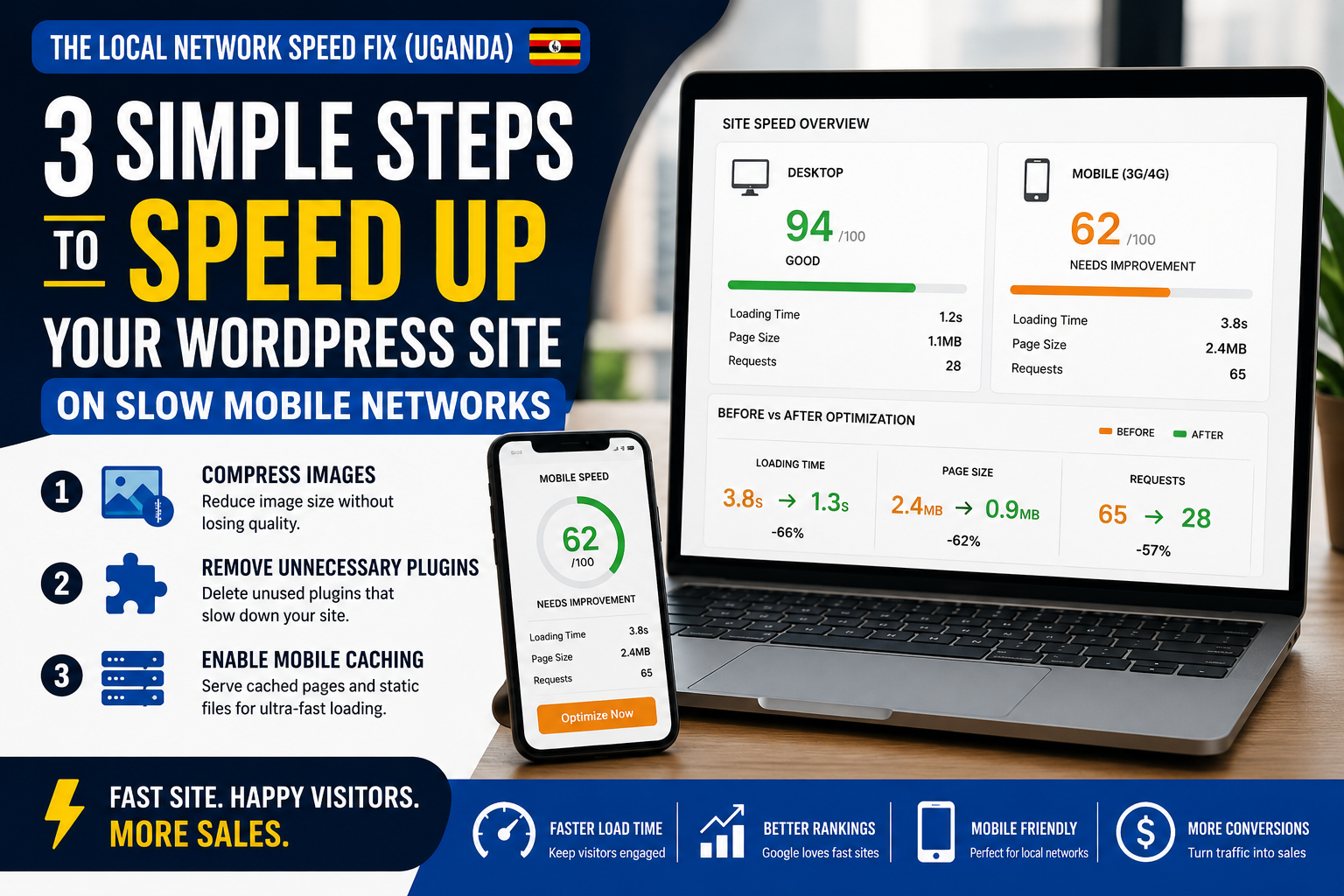
  • 3 Simple Steps to Speed Up Your WordPress Site on Slow Mobile Networks.

    3 Simple Steps to Speed Up Your WordPress Site on Slow Mobile Networks.

    3 Simple Steps to Speed Up Your WordPress Site on Slow Mobile Networks

    3 Simple Steps to Speed Up Your WordPress Site on Slow Mobile Networks can dramatically improve your website’s performance, especially for visitors browsing on cellular data connections across Uganda and East Africa.

    Ready to cut your website loading time in half so slow Ugandan internet speeds stop killing your sales?

    Many business owners invest heavily in social media advertising, SEO, and content marketing, only to lose potential customers because their website takes too long to load. When a visitor clicks your link and waits several seconds for a page to appear, there’s a good chance they’ll leave and visit a competitor instead.

    This challenge is especially common in Uganda, where a large percentage of internet users browse websites using mobile data bundles on 3G and 4G networks. Every unnecessary second of loading time increases bounce rates and reduces conversions.

    The good news is that you don’t need expensive infrastructure upgrades to improve performance. A few strategic adjustments can make a noticeable difference.

    In this guide, you’ll learn a simple three-step optimization routine that can help your WordPress website load faster, improve user experience, and increase sales.


    Table of Contents

    1. Why Website Speed Matters
    2. Test Your Current Mobile Speed
    3. Step 1: Compress Heavy Images
    4. Step 2: Remove Unnecessary Plugins
    5. Step 3: Enable Mobile Caching
    6. Common WordPress Speed Mistakes
    7. Additional Optimization Tips
    8. Frequently Asked Questions
    9. Conclusion

    Why Website Speed Matters More in Uganda

    Many website owners test their websites using high-speed office internet and assume everything is working perfectly.

    However, most visitors experience your website differently.

    Across Uganda and much of East Africa, users commonly browse using:

    • MTN data bundles
    • Airtel mobile internet
    • Shared Wi-Fi connections
    • Public hotspot networks

    These connections are often slower and less stable than business-grade broadband.

    Studies consistently show that users begin abandoning websites when pages take more than three seconds to load.

    Slow websites create several problems:

    • Lower search engine rankings
    • Higher bounce rates
    • Reduced customer trust
    • Lower conversion rates
    • Lost revenue

    A fast website, on the other hand, creates a smoother customer experience and encourages visitors to stay longer.


    Test Your Current Mobile Speed

    Before making changes, establish a baseline.

    Use tools such as:

    Google PageSpeed Insights

    This tool evaluates both desktop and mobile performance and identifies speed issues.

    GTmetrix

    GTmetrix provides detailed performance reports and optimization recommendations.

    Pingdom Website Speed Test

    Useful for measuring loading times and identifying bottlenecks.

    Pay particular attention to:

    • Mobile performance score
    • Largest Contentful Paint (LCP)
    • Total page size
    • Number of requests
    • Time to Interactive

    These metrics reveal where improvements are needed.


    Step 1: Compress Heavy Images

    Images are often the biggest reason WordPress websites load slowly.

    Many business owners upload photos directly from their smartphones or cameras without optimization.

    A single image can easily exceed 5MB.

    When multiple large images appear on a page, loading times increase dramatically.

    Why Image Compression Matters

    Visitors on limited data plans must download every image before viewing your content.

    Large images consume:

    • More bandwidth
    • More server resources
    • More loading time

    This creates frustration for users and increases bounce rates.

    Best Practices for Image Optimization

    Resize Before Uploading

    If your website displays images at 1200 pixels wide, avoid uploading 6000-pixel originals.

    Use Modern Formats

    WebP images are significantly smaller than traditional JPEG and PNG files.

    Compress Images Automatically

    Popular WordPress plugins include:

    • Smush
    • ShortPixel
    • Imagify

    These tools automatically reduce image sizes without noticeably affecting quality.

    Expected Results

    Many websites reduce page size by 50% or more simply through proper image optimization.


    Step 2: Remove Unnecessary Plugins

    WordPress plugins add functionality, but too many plugins can severely impact performance.

    Over time, many websites accumulate plugins that are no longer needed.

    Some business websites have 30, 40, or even 50 active plugins running simultaneously.

    How Plugins Slow Down Websites

    Each plugin may:

    • Load additional scripts
    • Generate database queries
    • Create external requests
    • Increase server processing time

    The result is slower page rendering.

    Conduct a Plugin Audit

    Review every installed plugin and ask:

    • Is it still necessary?
    • Is it actively being used?
    • Does another plugin already provide similar functionality?

    Remove anything that no longer serves a clear purpose.

    Replace Heavy Plugins

    Some plugins are known for poor performance.

    Whenever possible:

    • Use lightweight alternatives
    • Avoid duplicate functionality
    • Keep plugins updated

    A leaner WordPress installation almost always performs better.


    Step 3: Enable Mobile Caching

    Caching is one of the fastest ways to improve WordPress performance.

    When caching is enabled, your website serves pre-generated versions of pages instead of rebuilding them every time a visitor arrives.

    What Is Mobile Caching?

    Without caching:

    • Browser requests page
    • Server processes database
    • WordPress generates content
    • Page loads

    With caching:

    • Browser requests page
    • Cached version is delivered immediately

    This reduces server workload and speeds up loading times.

    Recommended Caching Plugins

    Popular solutions include:

    • LiteSpeed Cache
    • WP Rocket
    • W3 Total Cache

    These plugins can significantly reduce loading times when configured correctly.

    Mobile-Specific Benefits

    Caching is particularly useful for:

    • Mobile visitors
    • Slow network connections
    • High-traffic websites
    • E-commerce stores

    Pages load faster and consume less bandwidth.


    Common WordPress Speed Mistakes

    Uploading Full-Resolution Images

    Large image files remain one of the most common performance issues.

    Installing Too Many Plugins

    More plugins often mean more processing overhead.

    Ignoring Mobile Testing

    Desktop performance does not guarantee mobile performance.

    Poor Hosting

    Even a well-optimized website can struggle on low-quality hosting.

    Not Using Caching

    Failing to implement caching leaves performance gains on the table.


    Additional Optimization Tips

    If you want even better results, consider these advanced improvements.

    Use a Content Delivery Network (CDN)

    A CDN distributes content across multiple servers for faster delivery.

    Minify CSS and JavaScript

    Removing unnecessary code reduces file sizes.

    Optimize Your Database

    Regular database maintenance improves efficiency.

    Choose Lightweight Themes

    Avoid bloated themes loaded with unnecessary features.

    Enable Lazy Loading

    Images load only when users scroll to them.

    This reduces initial page load times significantly.


    Real-World Example

    Imagine an online fashion store in Kampala.

    The owner notices visitors arriving from Facebook ads but leaving quickly.

    After running a speed test, they discover:

    • Large product images
    • Excessive plugins
    • No caching

    After implementing the three fixes discussed above:

    • Mobile load time drops from 8 seconds to 2.5 seconds
    • Bounce rates decrease
    • Product views increase
    • Sales improve

    The website becomes usable even on slower mobile connections.


    FAQ

    How fast should a WordPress website load?

    Ideally, your website should load in under three seconds, with two seconds or less being the preferred target.

    Why is my WordPress website slow on mobile?

    Common causes include large images, excessive plugins, poor hosting, and missing caching configurations.

    Does website speed affect SEO?

    Yes. Search engines consider page speed when evaluating user experience and rankings.

    Which plugin is best for WordPress caching?

    Popular options include WP Rocket, LiteSpeed Cache, and W3 Total Cache.

    Can image compression reduce loading times?

    Absolutely. Image optimization is often the quickest and most effective way to improve performance.

    Is mobile speed important for Ugandan businesses?

    Yes. Since many users browse through mobile data networks, mobile optimization is essential for retaining visitors and increasing conversions.


    Conclusion

    3 Simple Steps to Speed Up Your WordPress Site on Slow Mobile Networks can dramatically improve user experience, reduce bounce rates, and help your website perform better across Uganda and East Africa. By compressing heavy images, removing unnecessary plugins, and enabling mobile caching, you can create a faster website that remains accessible even on unstable 3G and 4G connections.

    A fast website doesn’t just improve performance metrics—it protects your marketing investment, strengthens customer trust, and helps convert more visitors into paying customers.

    For businesses seeking professional optimization and performance audits, review speed metrics with EliteTeQ POS Tour & Web Developers and work toward achieving consistent load times under two seconds.